Monuments and museums of Madrid
From Habsburg Madrid to the Art Walk, with the metro station for each visit.
The essentials
- The monuments of Habsburg and Bourbon Madrid (Royal Palace, Almudena, Plaza Mayor) can be covered on foot in a morning.
- The Art Walk brings together the Prado, the Thyssen-Bornemisza and the Reina Sofía less than a kilometre apart.
- All the major museums have free hours or free-entry days: see Free Madrid.
- Book the big museums in advance in high season and always buy on the official website.
Essential monuments
Royal Palace
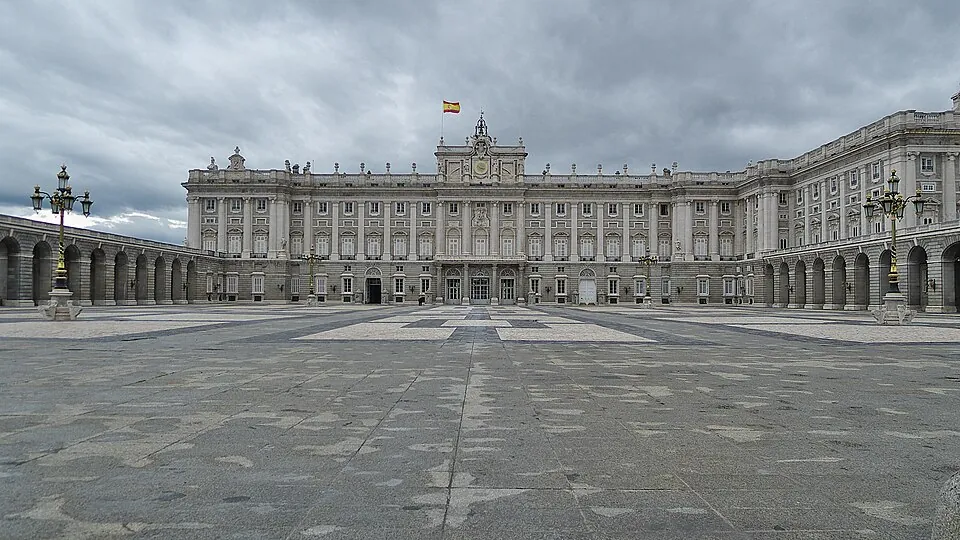
Built in the 18th century on the site of the old Alcázar, the Royal Palace is the official residence of the Kings of Spain, although today it is used mainly for state ceremonies. You can visit rooms such as the Throne Room and the Gala Dining Room, the Royal Armoury and the Royal Pharmacy. At its foot are the Sabatini Gardens and the Campo del Moro, with free entry. Opening times and tickets (Patrimonio Nacional).
Metro: Ópera (lines 2 and 5, branch line R).
Almudena Cathedral
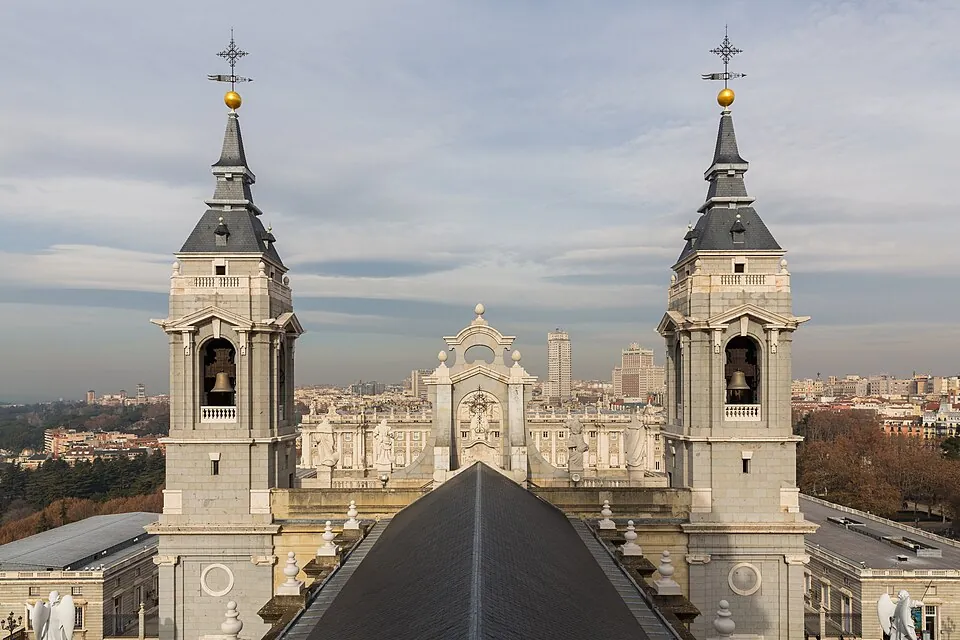
Madrid's cathedral was completed in 1993 and consecrated that same year. Its neoclassical façade matches the Royal Palace, while the interior mixes neo-Gothic and contemporary styles. The crypt and the dome can be visited. The Virgin of the Almudena is the patron saint of the city and is celebrated on 9 November.
Metro: Ópera.
Plaza Mayor
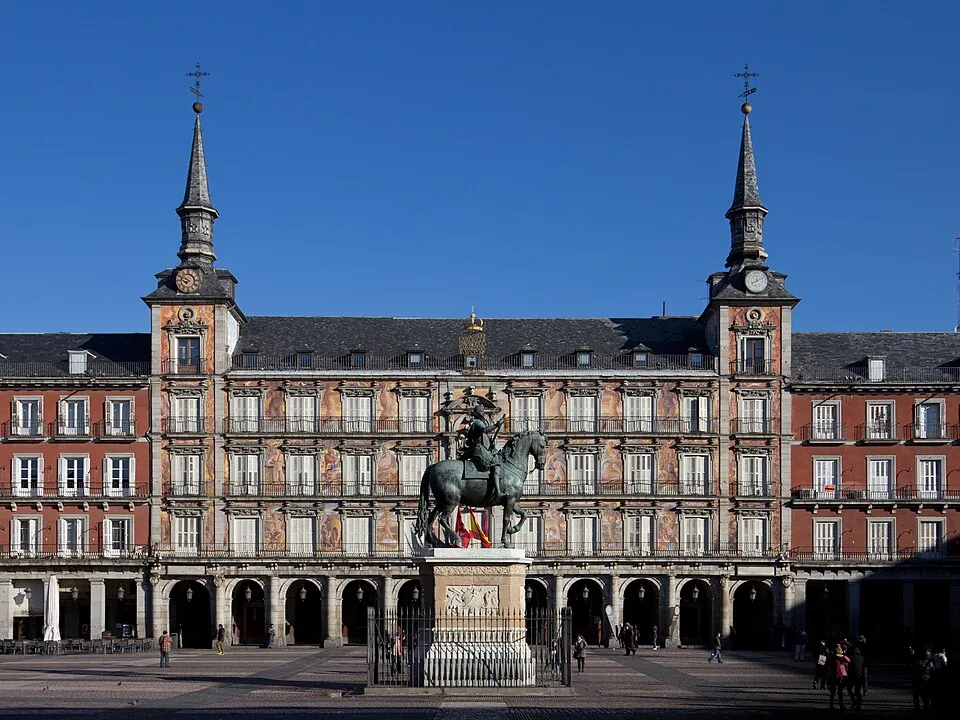
Designed in the early 17th century by Juan Gómez de Mora for Philip III, the square is a great arcaded rectangle enclosed by houses with uniform balconies. On the north side the Casa de la Panadería stands out, with its painted façade. The Arco de Cuchilleros leads down to the most traditional inns and taverns. At Christmas it hosts the traditional Christmas market.
Metro: Sol (lines 1, 2 and 3).
Temple of Debod
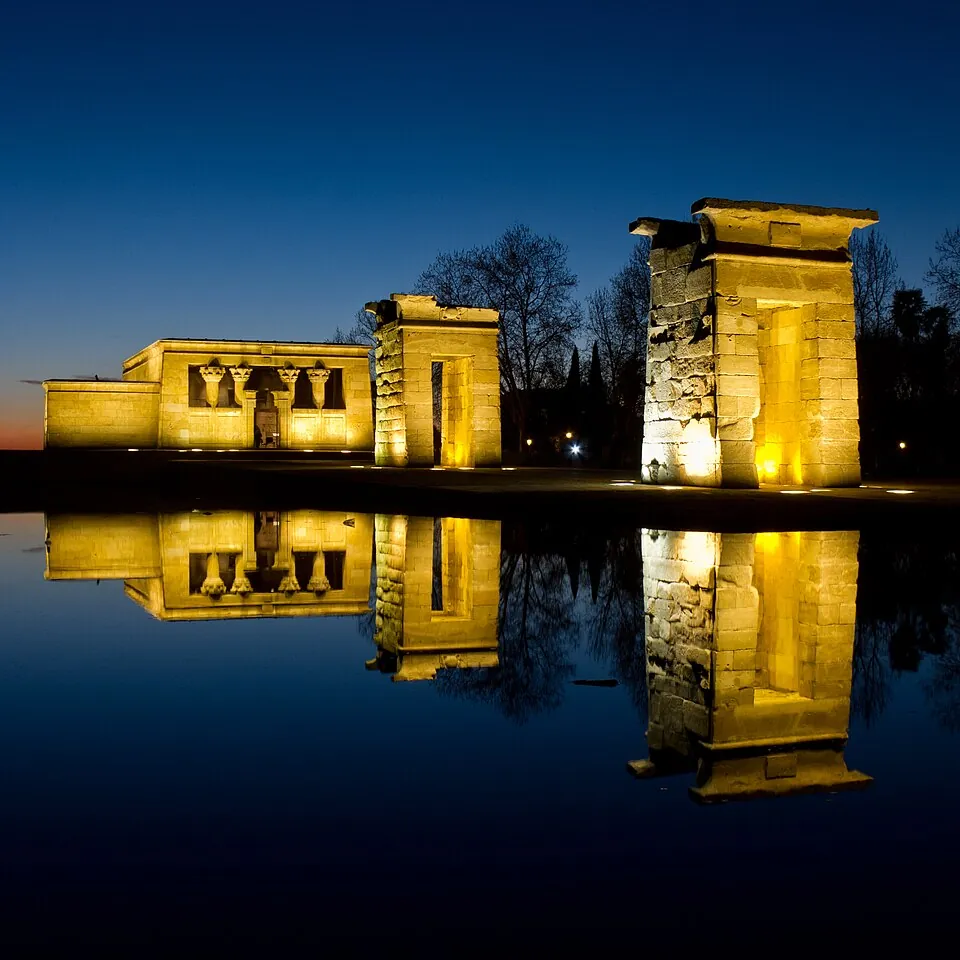
Egypt gave this temple, built in Nubia more than two thousand years ago, to Spain in gratitude for its help in rescuing the temples of Abu Simbel. It was rebuilt stone by stone in the Cuartel de la Montaña park and opened to the public in 1972. Entry is free; at sunset it is one of the places with the best light in the city.
Metro: Plaza de España (3 and 10) and Ventura Rodríguez (3).
Cibeles Square
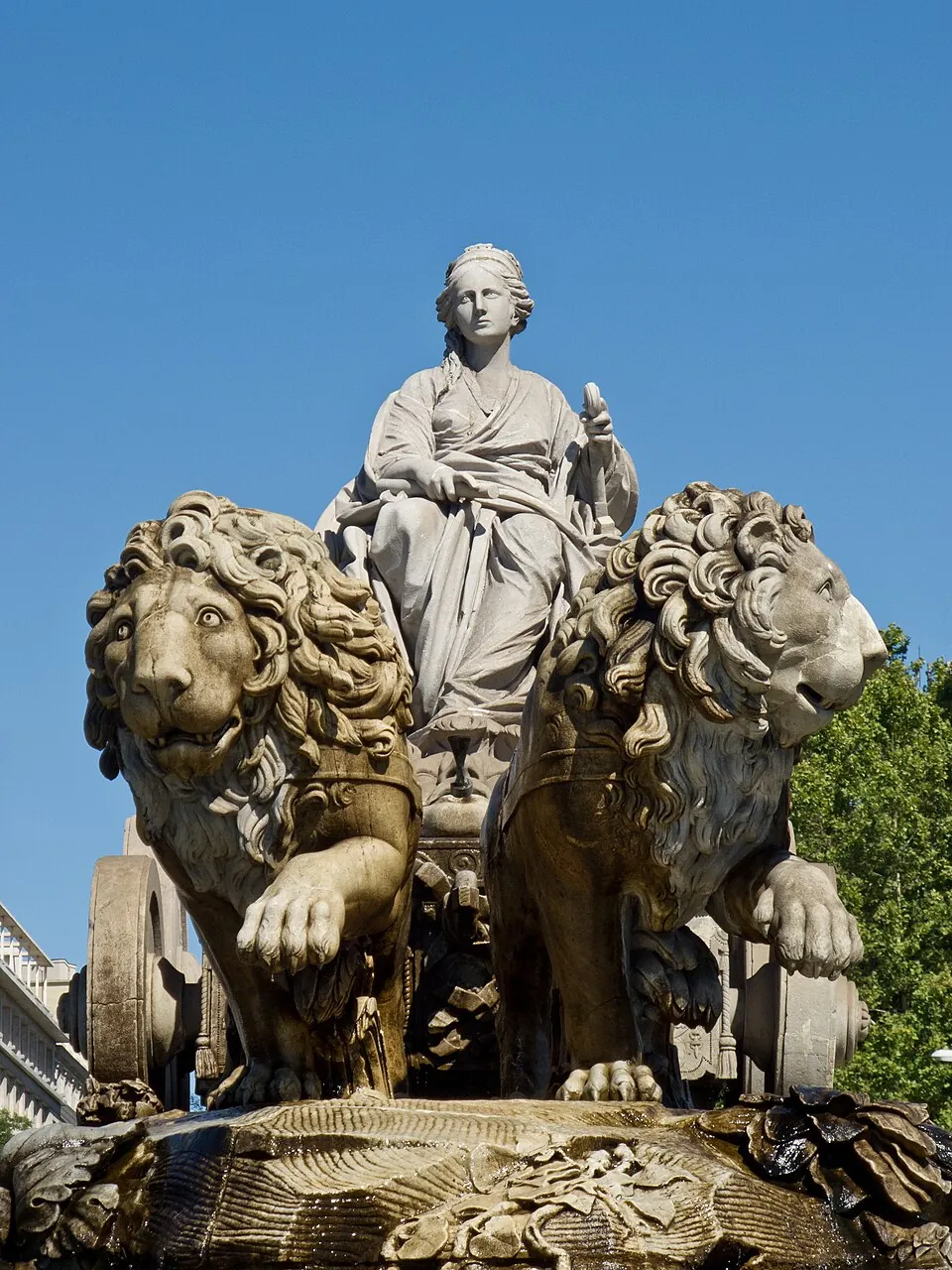
The fountain of the goddess Cibeles on her chariot pulled by lions is one of the symbols of Madrid. Opposite it stands the Cibeles Palace (the former Palacio de Comunicaciones), now home to the City Council and to CentroCentro, a cultural centre with a viewing terrace. To the east Calle de Alcalá begins and runs to the Puerta de Alcalá.
Metro: Banco de España (line 2).
Puerta de Alcalá
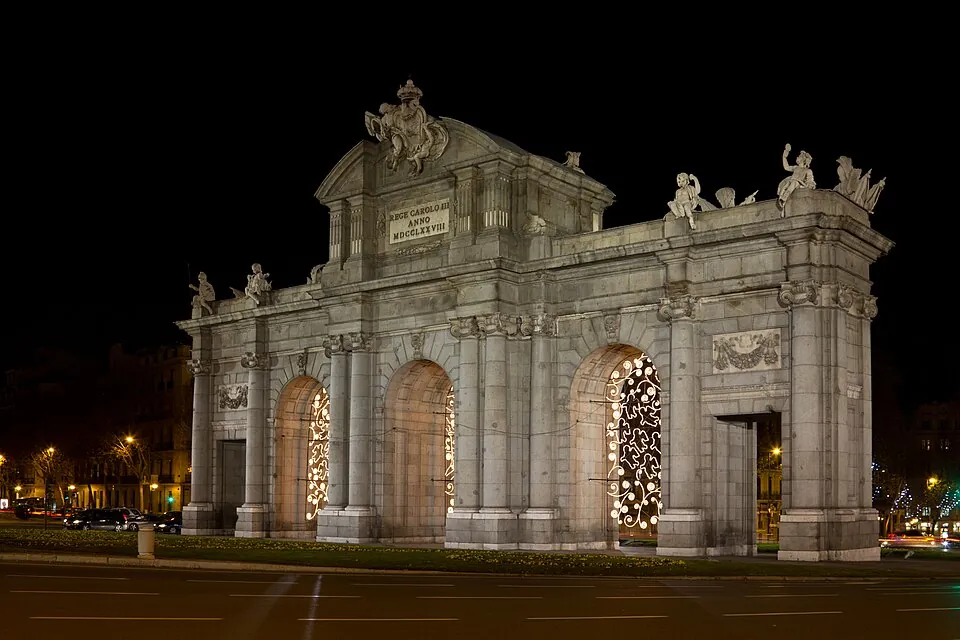
This neoclassical gate, built by order of Charles III and designed by Francesco Sabatini, was completed in 1778. It is a good entrance to the Retiro Park and a meeting point for many routes in the area.
Metro: Retiro (line 2).
More monuments and squares
- Plaza de Oriente and Teatro RealA landscaped square between the Royal Palace and the opera house.
- Plaza de la VillaThe former seat of the City Council, with 17th-century buildings.
- San Francisco el GrandeA basilica with a large dome and a richly decorated interior.
- Hermitage of San Antonio de la FloridaGoya's frescoes on the dome; the painter is buried here.
- Puerta de Europa and the Plaza de Castilla towersThe most modern Madrid, along the Paseo de la Castellana.
Main museums
Prado National Museum
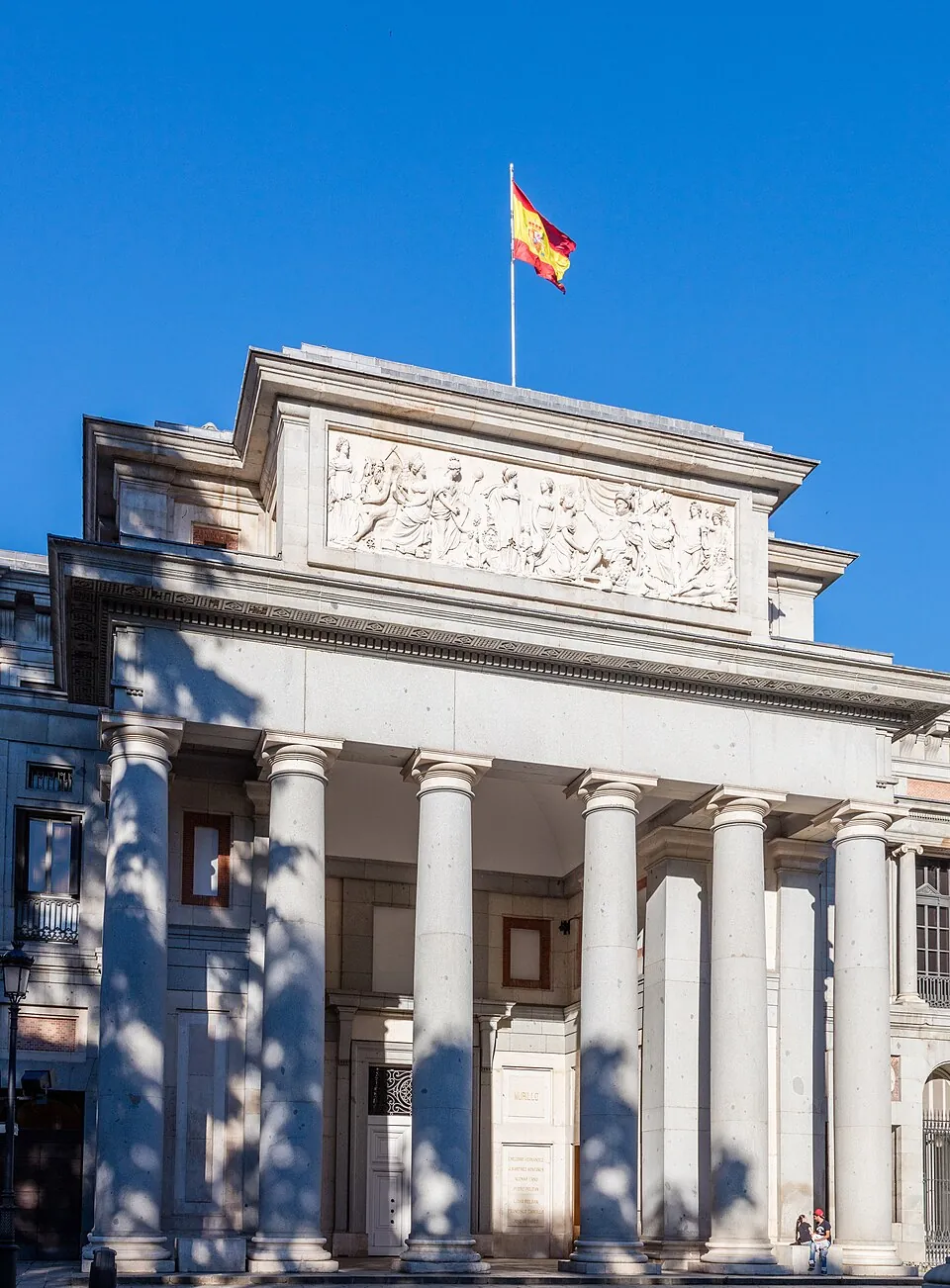
Opened to the public in 1819, it is the most important art gallery in Spain. It holds masterpieces by Velázquez («Las Meninas»), Goya (the «Majas» and «The Third of May 1808»), El Greco, Rubens, Titian and Bosch («The Garden of Earthly Delights»). For a first visit, 2 or 3 hours focused on those artists are enough. Official website.
Metro: Banco de España (2) and Atocha (1).
Reina Sofía National Art Centre Museum
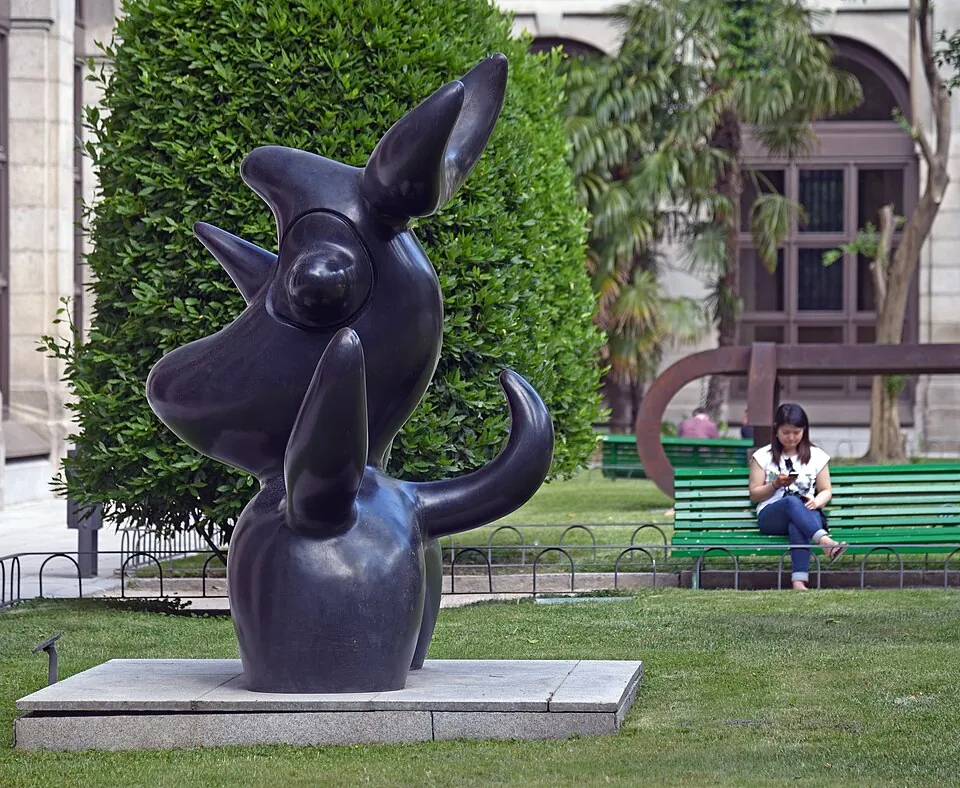
Devoted to the art of the 20th and 21st centuries, it occupies the former San Carlos General Hospital, extended by Jean Nouvel. Its most famous work is Picasso's «Guernica», alongside works by Dalí, Miró, Juan Gris and others. Read our guide to the Reina Sofía and «Guernica» or visit the official website.
Metro: Atocha (line 1) and Estación del Arte (line 1).
Thyssen-Bornemisza Museum
Housed in the Villahermosa Palace, it traces the history of painting from the 13th to the 20th centuries with Baron Thyssen-Bornemisza's collection. It completes the Art Walk because it covers what the Prado and the Reina Sofía do not: from the Italian Renaissance to Impressionism and the avant-garde. Official website.
Metro: Banco de España (line 2).
CaixaForum Madrid
A cultural centre with temporary exhibitions, housed in a former power station and crowned by Patrick Blanc's famous vertical garden on the neighbouring square. Programme.
Metro: Atocha (line 1).
More museums to choose from
| Museum | What it offers | Metro |
|---|---|---|
| National Archaeological Museum | The Lady of Elche, Iberian and Roman art in a renovated building | Serrano, Colón (4) |
| Sorolla Museum | The home and garden of the painter Joaquín Sorolla, with Mediterranean light | Iglesia (1), Rubén Darío (5) |
| Lázaro Galdiano Museum | A private art collection in a mansion in Salamanca district | Núñez de Balboa (5, 9) |
| Cerralbo Museum | The palace-museum of a 19th-century aristocratic family | Plaza de España (3, 10) |
| Museum of the Americas | Pre-Columbian and colonial art and culture of the Americas | Moncloa (3, 6) |
| Museum of Romanticism | 19th-century daily life in a mansion in Chamberí | Tribunal (1, 10) |
| Royal Botanical Garden | An 18th-century garden next to the Prado | Atocha (1) |
How to combine monuments and museums
One morning for the Royal Palace and the Almudena, another for the Art Walk and an afternoon in the Retiro make a good three-day plan. The symbolic map shows everything at a glance, with the nearest metro station to each place.