Main highlights of Madrid
Ten must-sees for a first visit, with the nearest metro and the best time to go.
The essentials
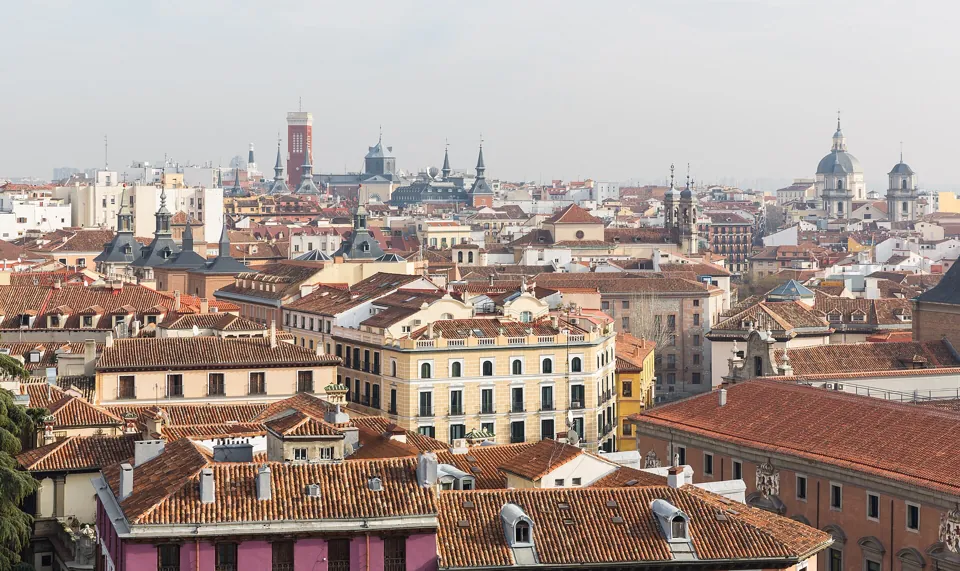
- Madrid has three world-famous museums (the Prado, the Reina Sofía and the Thyssen-Bornemisza) on the so-called Art Walk, plus a Royal Palace, a cathedral and a Plaza Mayor you can visit on foot.
- The Retiro Park and the Paseo del Prado have been a UNESCO World Heritage Site since 2021.
- The historic centre is compact: it takes about fifteen minutes to walk from the Puerta del Sol to the Royal Palace.
- First visit? Useful numbers, transport, opening hours and customs in Practical information.
- The best seasons are spring and autumn: summer is very hot and winter is cold and dry.
Ten Madrid must-sees
Madrid is best enjoyed on foot, from square to square and museum to museum. If it is your first visit, here is our selection of what you should not miss:
- Royal PalaceThe official residence of the monarchs, used for state ceremonies, and one of the largest palaces on the continent. Read more
- Plaza MayorThe great arcaded square of the 17th century, with the Casa de la Panadería and its murals. Read more
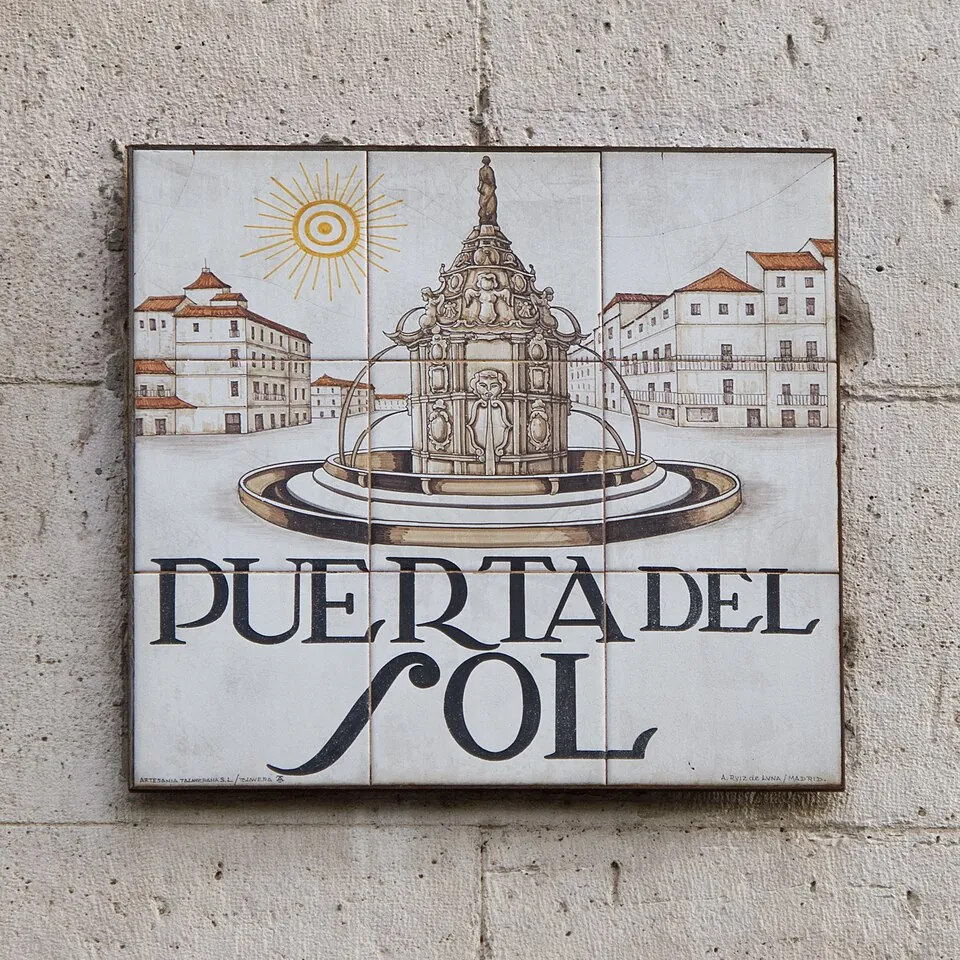
- Puerta del SolKilometre zero, the bear and the strawberry tree, and the New Year's Eve grapes. Read more
- Prado MuseumVelázquez, Goya, El Greco, Rubens and Bosch. Read more
- Reina Sofía MuseumPicasso's «Guernica» and art of the 20th and 21st centuries. Read more
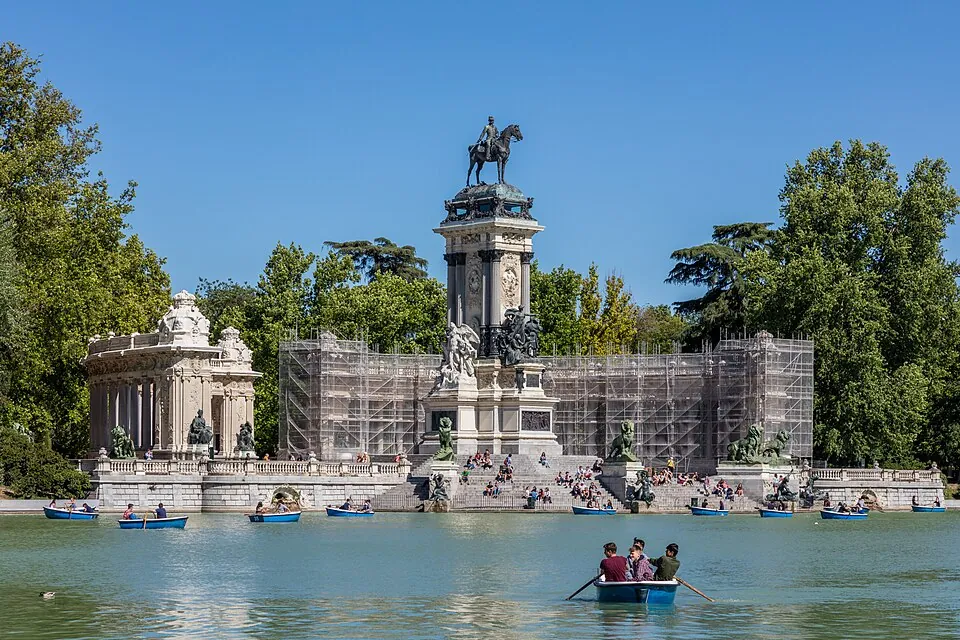
- Retiro ParkA lake, the Crystal Palace and a rose garden in the middle of the city. Read more
- Gran VíaThe avenue of cinemas, theatres and musicals. Read more
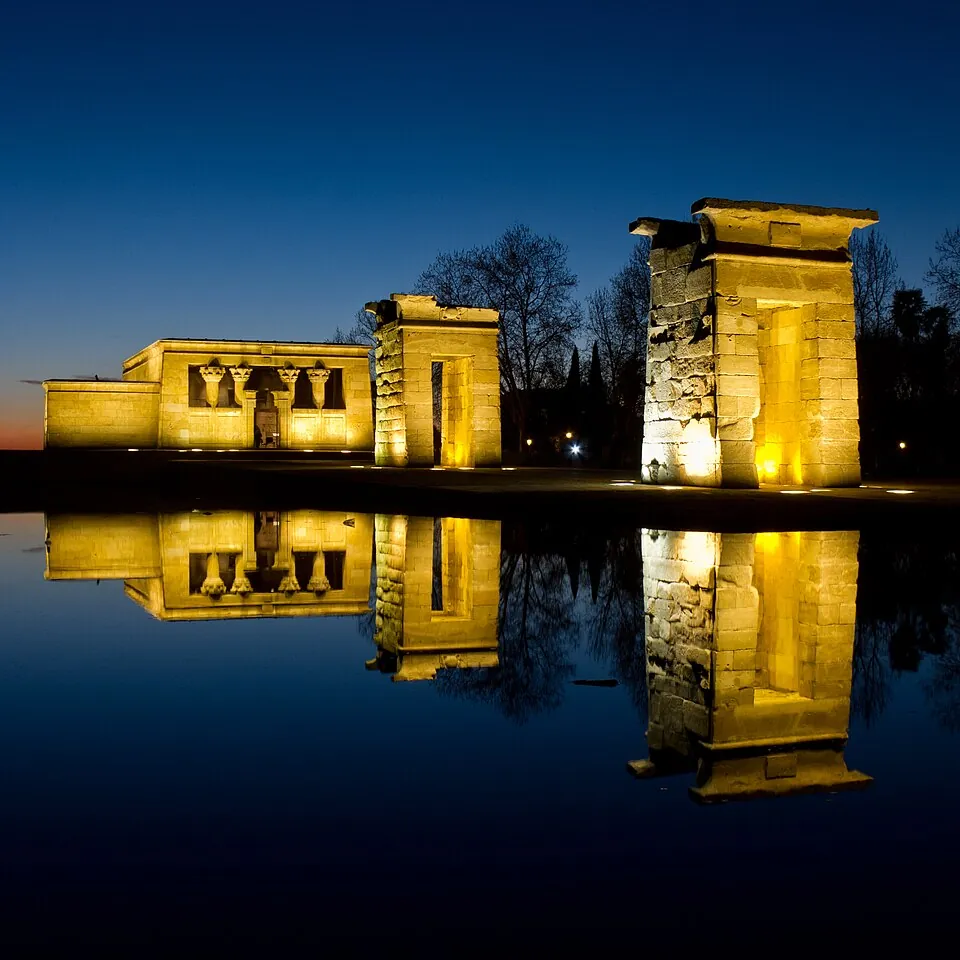
- Temple of DebodA genuine Egyptian temple with sunset views. Read more
- Cibeles Square and the Puerta de AlcaláTwo city icons on the axis of Calle de Alcalá. Read more
- A day trip to the mountainsMountains, Roman roads and villages less than an hour away. Read more
Puerta del Sol: kilometre zero
The Puerta del Sol is the symbolic centre of Spain: on the pavement in front of the Real Casa de Correos a plaque marks kilometre zero of the country's radial roads. On that façade, the clock strikes the chimes with which Spaniards eat the twelve grapes on New Year's Eve. Around it you will find the statue of the bear and the strawberry tree, the symbol of the city, the Mariblanca and the illuminated Tío Pepe sign. The Casa de Correos is now the seat of the president of the Community of Madrid.
Metro: Sol (lines 1, 2 and 3).
Plaza de España and around
At the end of the Gran Vía, Plaza de España is dominated by the monument to Cervantes, with Don Quixote and Sancho Panza. Close by are the Temple of Debod, the Parque del Oeste and the Cerralbo Museum. It is a good starting point for walking down to the Royal Palace along Calle de Bailén.
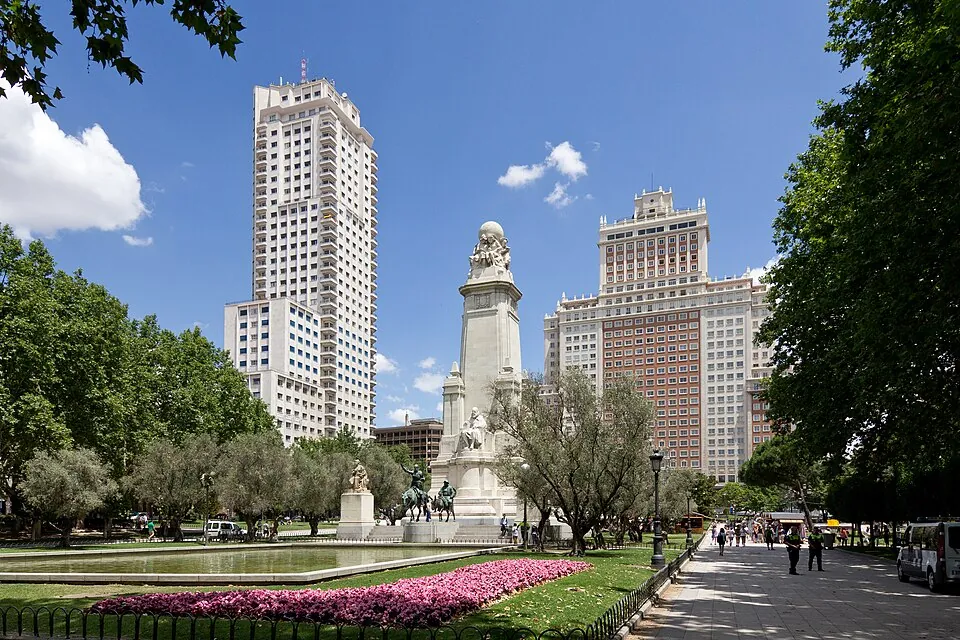
Metro: Plaza de España (lines 3 and 10).
Gran Vía: the avenue of shows
Opened in the early 20th century, the Gran Vía brings together buildings in very different styles: from the Metrópolis Building, with its winged dome, to the Telefónica skyscraper. It is «Madrid's Broadway»: musicals premiere here and historic cinemas and theatres still operate. Walk along it by day and come back at night, when the signs light up.
The Telefónica Building (1929), almost 90 metres tall, was Madrid's first skyscraper and one of the tallest in Europe at the time. It was home to the telephone operators who inspired the series «Cable Girls» («Las chicas del cable»), set in late-1920s Madrid.
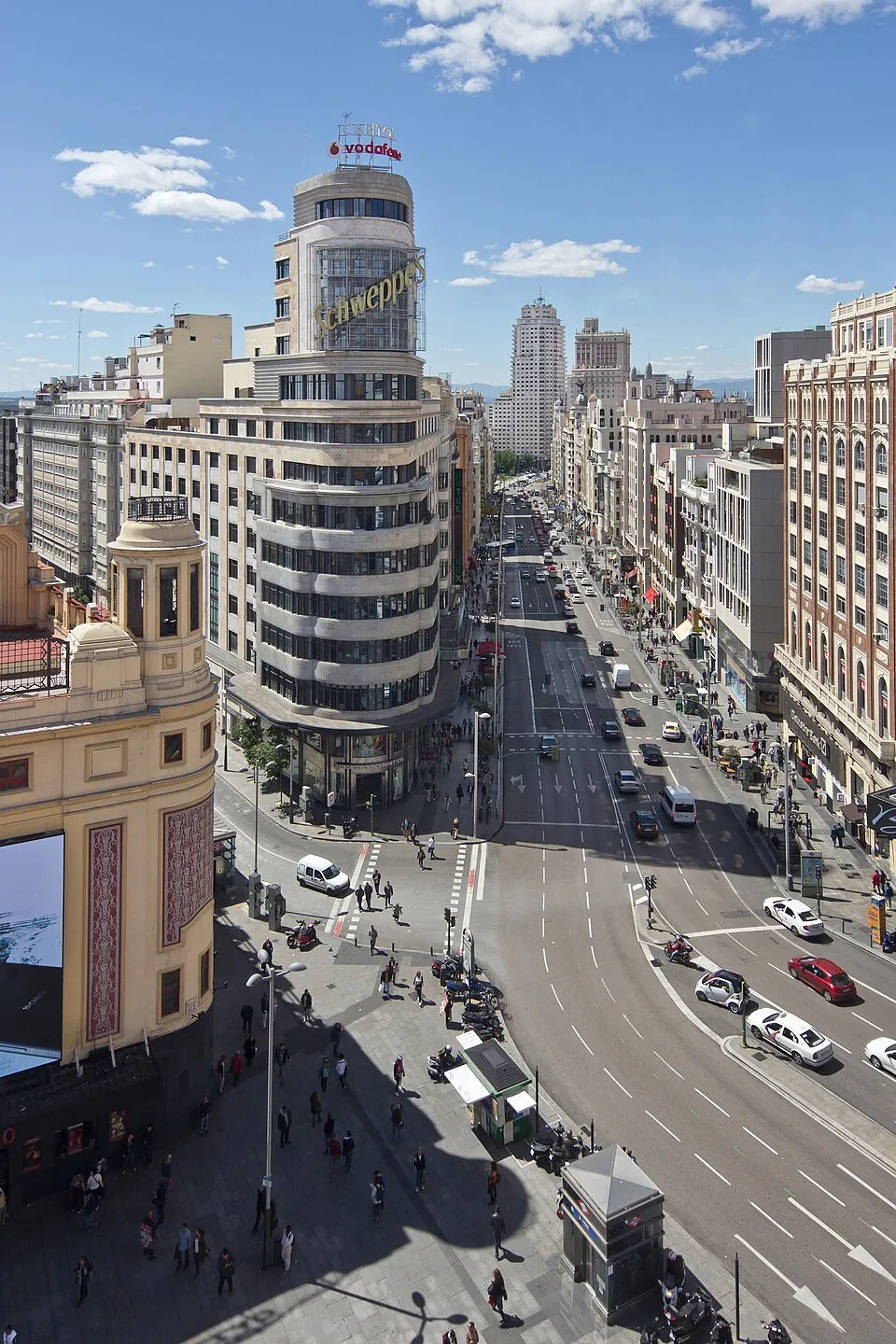
Metro: Gran Vía (1 and 5), Callao (3 and 5), Santo Domingo (2).
The Retiro and the Art Walk
The Retiro Park was originally a pleasure garden for the kings and is now the great green lung of the centre. Among its corners: the lake with rowing boats, the Crystal Palace (1887), the Velázquez Palace, the Rose Garden and the Fountain of the Fallen Angel. Together with the Paseo del Prado it forms the cultural landscape declared a World Heritage Site by UNESCO in 2021.
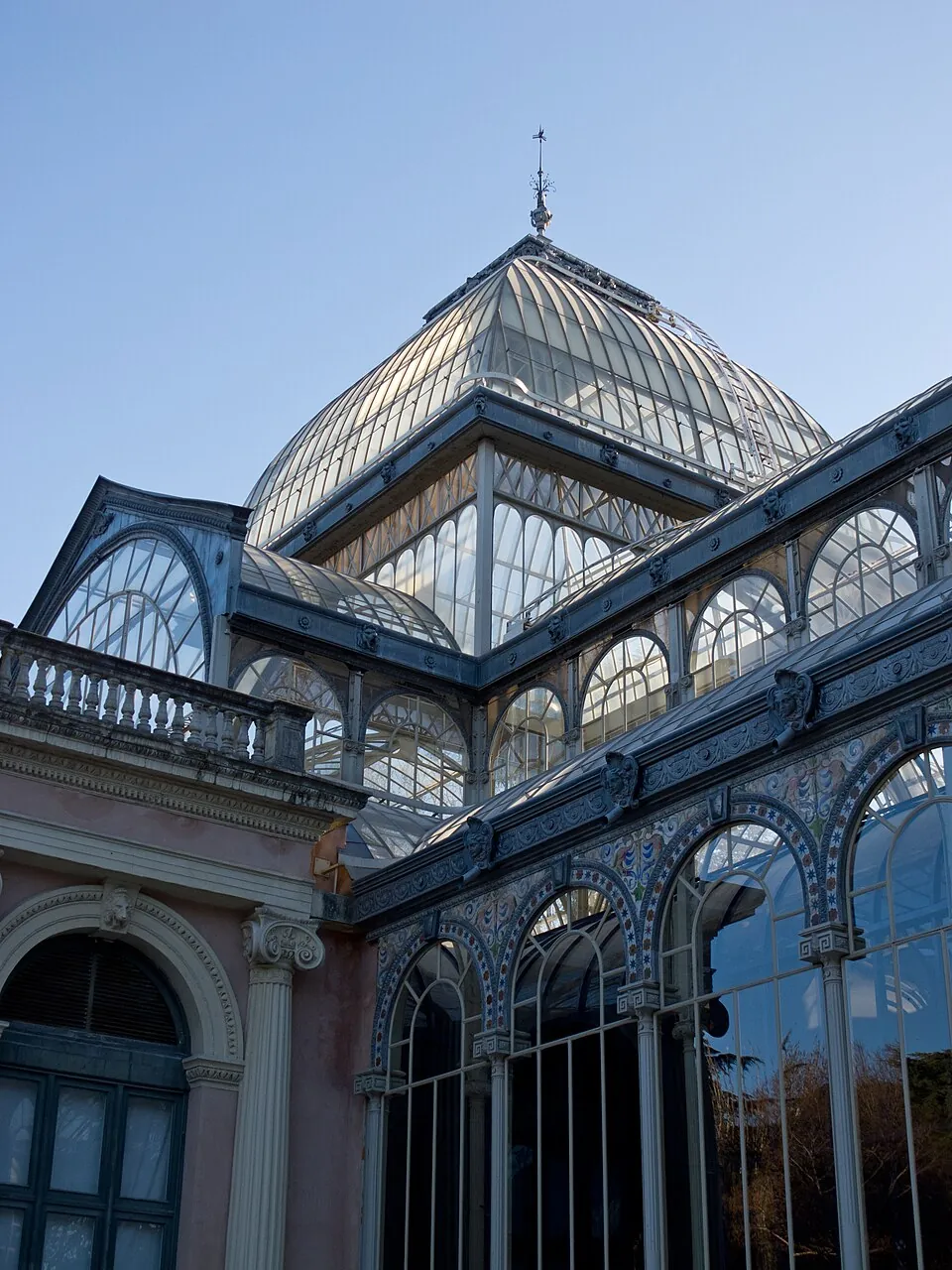
Metro: Retiro (line 2), Ibiza (9) and Atocha (1).
When to go
Madrid has a continental climate: very hot summers and cold, dry winters. Spring and autumn are the ideal months for walking; May brings San Isidro and December the Christmas atmosphere. In summer, make the most of the mornings and of air-conditioned museums.
Annual mean of daily highs: 20.1 °C. Source: AEMET Climate Atlas (Madrid municipality, 1971-2000). Summers are very hot and winters cold and dry: spring and autumn are the most pleasant months.
Getting there and getting around
- Madrid-Barajas AirportMetro line 8, commuter trains and an express bus connect with the centre. Getting there
- TrainHigh-speed trains from Atocha and Chamartín to all of Spain.
- Metro302 stations: the fastest way to get around. Metro and bus
- On footThe centre is compact: almost everything is within half an hour's walk.
How many days do you have?
In Plan your trip we suggest one- and three-day routes and a plan finder by interest; and in Routes, walks with a map.
Frequently asked questions
How many days do you need to see Madrid?
Two or three days cover the essentials: Habsburg Madrid, the Art Walk and the Retiro. With five you can add districts and a day trip to the mountains or El Escorial.
When is the best time to visit Madrid?
Spring and autumn: summer is very hot and winter is cold and dry.